Loading...
Bushfire Damage Restoration
24/7Emergency Response
BushfireSpecialists
IICRCCertified Contractors
NationalAustralia-Wide Coverage
Emergency Bushfire Response
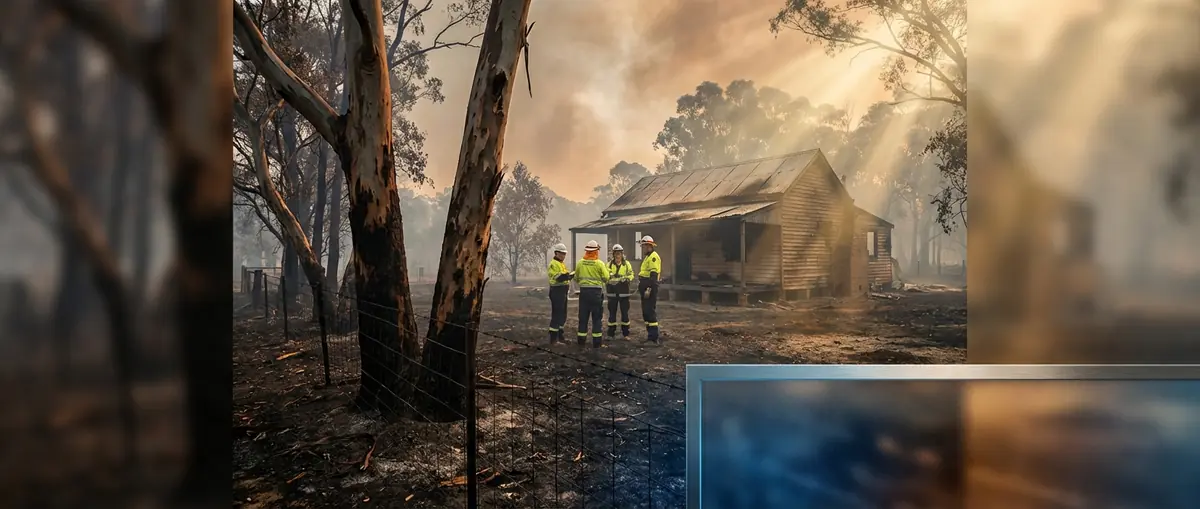
After a bushfire passes through, the danger is far from over. Smouldering debris, compromised structures, toxic ash and hidden hot spots can reignite at any time. Disaster Recovery connects you with IICRC-certified contractors who deliver emergency make-safe and assessment services across Australia — responding as soon as authorities grant property access.
Immediate steps after bushfire damage:
- Do not return to the property until authorities confirm it is safe — bushfire areas may contain live embers, unstable structures and downed power lines
- If safe to approach, photograph all visible damage from a safe distance before any cleanup begins
- Do not disturb ash or debris — it may contain asbestos fibres or other hazardous materials
- Contact your insurer to lodge a claim as early as possible
- Start your claim online — our platform lodges your details and dispatches the nearest available contractor for emergency assessment and make-safe work
Emergency make-safe work — including structural shoring, hazard fencing, temporary weatherproofing and securing the site against further damage — is typically covered under your insurance policy. Acting quickly prevents secondary damage from weather exposure, vandalism and continued smoke infiltration.
Types of Bushfire Damage
Bushfires cause damage through multiple mechanisms — often simultaneously. Understanding the type of damage is critical for accurate insurance documentation and selecting the correct restoration approach. Our contractor network is certified to assess and restore all categories of bushfire damage.
Direct Flame Contact
Complete or partial destruction of building elements through direct fire contact — collapsed roofing, burnt framing, destroyed cladding and melted fixtures. Often requires demolition and full rebuild.
Radiant Heat Damage
Intense radiant heat from a nearby fire front can crack and shatter windows, warp metal roofing, melt PVC plumbing, degrade timber and ignite combustible materials inside the property — even without direct flame contact.
Ember Attack
Burning embers can travel kilometres ahead of the fire front, lodging in roof cavities, gutters, decking gaps and subfloor spaces. Ember attack is the most common cause of property loss in Australian bushfires.
Smoke Infiltration
Smoke penetrates wall cavities, ceiling spaces, HVAC ductwork, soft furnishings and porous materials. Acidic soot residues corrode metals, discolour surfaces, damage electronics and create persistent, harmful odour throughout the property.
Water Damage from Firefighting
Properties that survive the fire often sustain significant water damage from firefighting efforts. Thousands of litres of water and fire-retardant chemicals can saturate walls, flooring, insulation and electrical systems — requiring professional drying and restoration.
Contaminated Soil & Ash
Bushfire ash can contain heavy metals, asbestos fibres, household chemicals and other toxins. Contaminated soil and ash must be professionally assessed and removed before rebuilding or reoccupation to protect occupant health and meet EPA requirements.
Our Bushfire Restoration Process
From emergency make-safe through to final handover, our structured restoration process ensures your property is safely assessed, thoroughly documented and professionally restored — with insurance supported at every stage.
1. Safety Assessment
A certified contractor inspects the property for structural stability, hazardous materials (including asbestos), electrical safety and remaining fire risks. The site is secured with hazard fencing and temporary shoring where required. Comprehensive photographic documentation begins immediately.
2. Debris & Hazard Removal
Fire-damaged debris, contaminated ash, hazardous materials and destroyed contents are safely removed and disposed of in accordance with EPA regulations. Licensed asbestos removalists are engaged where ACMs are identified. The site is cleared and prepared for restoration works.
3. Smoke & Soot Cleanup
Professional smoke and soot removal using HEPA-filtered vacuums, chemical sponges and specialist cleaning agents. Air scrubbers and ozone generators are deployed to eliminate smoke odour from wall cavities, ceiling spaces and ductwork. Thermal deodorisation techniques neutralise embedded smoke particles.
4. Structural Restoration
Once the claim is approved, permanent repairs and rebuilding are completed — structural framing, roofing, cladding, internal plastering, electrical rewiring, plumbing, painting and any other works required to return the property to its pre-bushfire condition or to meet current building standards.
Bushfire Insurance Claims
Navigating an insurance claim after a bushfire is complex — particularly when dealing with total loss, hazardous materials, temporary accommodation and the emotional weight of losing a home or business. Disaster Recovery simplifies the process by connecting you with experienced, IICRC-certified contractors who understand exactly what insurers require.
How we support your bushfire insurance claim:
- Comprehensive damage documentation — every aspect of fire, smoke, heat and water damage is photographed, measured and recorded using professional-grade equipment including thermal imaging cameras and moisture meters
- Detailed scope of works — a line-by-line breakdown of all required restoration, demolition and rebuilding works is prepared in the format your insurer expects
- Hazardous materials reporting — asbestos assessments, contaminated soil reports and EPA compliance documentation are included where applicable
- Emergency make-safe invoicing — immediate stabilisation costs are documented separately to support prompt reimbursement under your policy
- Comprehensive claims documentation — IICRC-certified contractors in our network prepare detailed documentation, photos, and reports to support your insurance reimbursement claim
- Progress reporting — regular updates with photographic evidence are provided throughout the restoration to satisfy insurer milestones and maintain claim momentum
Most Australian home and commercial insurance policies cover bushfire and grassfire as standard perils. Cover typically extends to the dwelling, outbuildings, contents, temporary accommodation, debris removal and professional fees. Review your Product Disclosure Statement (PDS) for specific terms, sum insured limits and excess amounts.
Health & Safety After a Bushfire
Bushfire aftermath presents serious health and safety hazards that are not always immediately obvious. Professional assessment and remediation are essential before a property can be safely reoccupied or rebuilt.
Smoke Inhalation & Air Quality
Residual smoke particles, soot and volatile organic compounds persist inside fire-affected properties long after the fire is extinguished. Fine particulate matter (PM2.5) poses respiratory risks to all occupants, particularly children, the elderly and those with asthma or cardiovascular conditions. Professional air scrubbing is essential.
Asbestos Exposure
Properties built before 1990 may contain asbestos in roofing, eaves, cladding, fencing, insulation and flooring. When damaged or destroyed by fire, asbestos fibres are released into the air and soil. A licensed asbestos assessor must inspect the site before any cleanup, demolition or rebuilding commences.
Contaminated Soil
Ash and debris from burnt structures can contaminate surrounding soil with heavy metals, household chemicals and asbestos. Soil testing may be required by your local EPA or council before the site can be cleared for rebuilding. Children and pets must be kept away from contaminated areas.
Structural Instability
Fire-weakened structures can collapse without warning. Load-bearing walls, roof trusses, retaining walls and concrete elements may have lost structural integrity due to extreme heat exposure. A qualified structural engineer or building inspector must assess the property before re-entry is permitted.
Water Supply Contamination
Bushfires can contaminate rainwater tanks, bore water and local water supply infrastructure. Water should not be consumed, used for cooking or used for bathing until it has been tested and cleared by the relevant authority. Contaminated water systems require professional flushing and treatment.
Equipment & Technology
IICRC-certified contractors in the Disaster Recovery network use specialist equipment designed for bushfire restoration — from smoke deodorisation and air purification through to structural drying and hazardous materials management.
Air Scrubbers & HEPA Filtration
Industrial air scrubbers with HEPA filters capture fine particulate matter, soot particles and airborne contaminants down to 0.3 microns. Deployed throughout the property to restore safe indoor air quality during and after smoke damage cleanup.
Ozone Generators & Thermal Deodorisation
Ozone generators oxidise smoke odour molecules at the molecular level, while thermal deodorisation (thermal fogging) penetrates wall cavities, ceiling spaces and porous materials to neutralise embedded smoke particles that conventional cleaning cannot reach.
Structural Drying Equipment
Commercial-grade dehumidifiers, air movers and axial fans for rapid structural drying of properties affected by firefighting water. Prevents secondary mould growth and timber deterioration in fire-surviving structures.
Hazardous Materials PPE & Containment
Full respiratory protection, Tyvek suits, negative air pressure containment and decontamination units for safe handling of asbestos, contaminated ash and other hazardous materials commonly encountered on bushfire-damaged properties.
Digital Documentation Systems
Cloud-based reporting with geotagged photographs, timestamped readings, thermal imaging results and standardised scope-of-works templates that meet all major insurer requirements for bushfire damage claims.
IICRC-Certified Practices
All restoration work follows IICRC S500:2025 (water damage), IICRC S520:2025 (mould) and IICRC S540 (fire and smoke) standards, ensuring best-practice outcomes and insurer confidence in the completed works.
Areas We Service
Disaster Recovery operates a nationwide contractor network with particular strength in bushfire-prone regions across Australia. Whether your property is in a metropolitan fringe, a regional township or a remote rural community, we coordinate the closest available IICRC-certified contractor to your location.
New South Wales
Sydney, Newcastle, Wollongong, Blue Mountains, Central Coast
Victoria
Melbourne, Geelong, Ballarat, Bendigo, Gippsland
Queensland
Brisbane, Gold Coast, Sunshine Coast, Toowoomba, Townsville
Western Australia
Perth, Bunbury, Margaret River, Albany, Geraldton
South Australia
Adelaide, Adelaide Hills, Mount Gambier, Port Augusta
Tasmania
Hobart, Launceston, Devonport, Huon Valley
Northern Territory
Darwin, Alice Springs, Katherine
ACT
Canberra and surrounding region
Bushfire-prone regions — including the Blue Mountains, Adelaide Hills, Gippsland, Margaret River and the ACT surrounds — are priority coverage areas within our network. We also support deployments to mining sites, remote pastoral properties and international operations including Papua New Guinea. No location is too remote.
Bushfire Damage Restoration — Frequently Asked Questions
How do I make an insurance claim after a bushfire?
Contact your insurer as soon as it is safe to do so and lodge a claim. Document all visible damage with photographs and video before any cleanup begins. Our platform streamlines this process — start a claim through our online form and we connect you with IICRC-certified contractors who provide detailed damage reports, photographic evidence and a scope of works formatted to meet insurer requirements. Emergency make-safe costs are typically covered immediately under your policy.
What is the difference between smoke damage and structural damage from a bushfire?
Structural damage involves the physical destruction of building elements — walls, roofing, framing and foundations — caused by direct flame contact, radiant heat or ember attack. Smoke damage, while less visually obvious, can be equally destructive. Smoke infiltrates wall cavities, ceiling spaces, ductwork and soft furnishings, leaving acidic soot residues that corrode metals, discolour surfaces and create persistent odour. Both types require specialist restoration but involve very different techniques and equipment.
When is it safe to return to my home after a bushfire?
Do not return until authorities have officially declared the area safe. Even after the fire is extinguished, hazards remain — including unstable structures, fallen power lines, hazardous materials (such as asbestos), contaminated water supplies and toxic ash. A qualified contractor should conduct a structural safety assessment before the property is reoccupied. Our network coordinates this assessment as part of every bushfire restoration project.
How does a bushfire affect air quality and what are the health risks?
Bushfire smoke contains fine particulate matter (PM2.5), carbon monoxide, volatile organic compounds and other toxic gases. Exposure can cause respiratory irritation, aggravate asthma and cardiovascular conditions, and pose serious risks to children, the elderly and those with pre-existing health conditions. Even after the fire is out, residual soot and ash inside a property continue to affect indoor air quality until professional cleaning and air scrubbing is completed.
How much does bushfire damage restoration cost?
Costs vary significantly depending on the extent of damage. Smoke and soot cleanup for a lightly affected property may start from several thousand dollars, while properties with structural fire damage, asbestos removal and full rebuilds can exceed six figures. Our cost guide at /cost/fire-damage provides indicative ranges, and our contractors provide detailed quotes after an on-site assessment. Most costs are covered under standard home and commercial insurance policies.
How long does bushfire restoration take?
Timelines depend on the severity of damage and the scope of work required. Emergency make-safe and smoke cleanup for a lightly affected property may take one to two weeks. Properties with significant structural damage, asbestos abatement and full interior restoration can take three to twelve months. Widespread bushfire events may also introduce delays due to contractor demand, material supply constraints and insurer processing times.
Is there an asbestos risk after a bushfire damages my property?
Yes — this is a serious concern for any property built before 1990 in Australia. Bushfire can damage or destroy asbestos-containing materials (ACMs) found in roofing, eaves, cladding, fencing and insulation, releasing dangerous fibres into the air and surrounding soil. A licensed asbestos assessor must inspect the property before any cleanup begins. Our contractors coordinate asbestos testing and, where required, engage licensed removalists who follow all SafeWork Australia and state EPA regulations.
What is the rebuilding process after a bushfire destroys a home?
The rebuilding process typically follows five stages: safety assessment and hazard clearance, insurance claim documentation and approval, site clearing and debris removal (including hazardous materials), design and council approval for the rebuild, and construction of the new dwelling. Our platform coordinates the first three stages and connects you with qualified builders for the construction phase. The entire process — from loss to reoccupation — can take twelve to twenty-four months depending on complexity.
Do you handle ember attack damage where there was no direct flame contact?
Yes. Ember attack is one of the most common causes of property damage during a bushfire. Embers can travel kilometres ahead of the fire front, lodging in roof cavities, gutters, decking gaps and subfloor spaces, where they ignite spot fires. Damage from ember attack ranges from localised scorching and melted fixtures through to complete structural loss. Our contractors are experienced in assessing and restoring all levels of ember attack damage.
Does my insurance cover bushfire damage?
Most Australian home and commercial insurance policies include bushfire and grassfire as covered perils. Cover typically extends to the dwelling, outbuildings, contents, temporary accommodation and debris removal. However, policy terms, sum insured limits and excess amounts vary between providers. We recommend reviewing your Product Disclosure Statement (PDS) and contacting your insurer promptly. Our platform helps you prepare a thorough, well-documented claim to support a smooth approval process.
You May Also Need
Related services and resources for your situation
Fire Damage RestorationProfessional fire damage restoration for structural fires, kitchen fires and electrical fires — smoke cleanup, soot removal and full rebuild services.Storm Damage RestorationEmergency storm damage response for cyclone, hail, wind and roof damage — 24/7 availability, IICRC-certified contractors.Smoke Damage RestorationSpecialist smoke and soot damage cleanup — air scrubbing, thermal deodorisation, HEPA filtration and content restoration.Emergency Board UpImmediate board-up and make-safe services for fire-damaged properties — securing openings, temporary weatherproofing and hazard fencing.Bushfire Damage Cost GuideIndicative pricing for bushfire damage restoration including smoke cleanup, structural repairs, asbestos removal and full rebuild costs.
Need Help? Get Started Now
Australia-wide emergency bushfire response — IICRC-certified contractors for fire damage, smoke damage, ember attack and structural restoration. Claims-ready documentation, 24/7 availability.
Get Emergency Help