The Danger of Airborne Spore Amplification
Mould is not a stain; it is a living biological organism. Wiping away visible colonies with household bleach only stresses the fungus, causing it to aggressively release thousands of microscopic mycotoxins into your HVAC system.
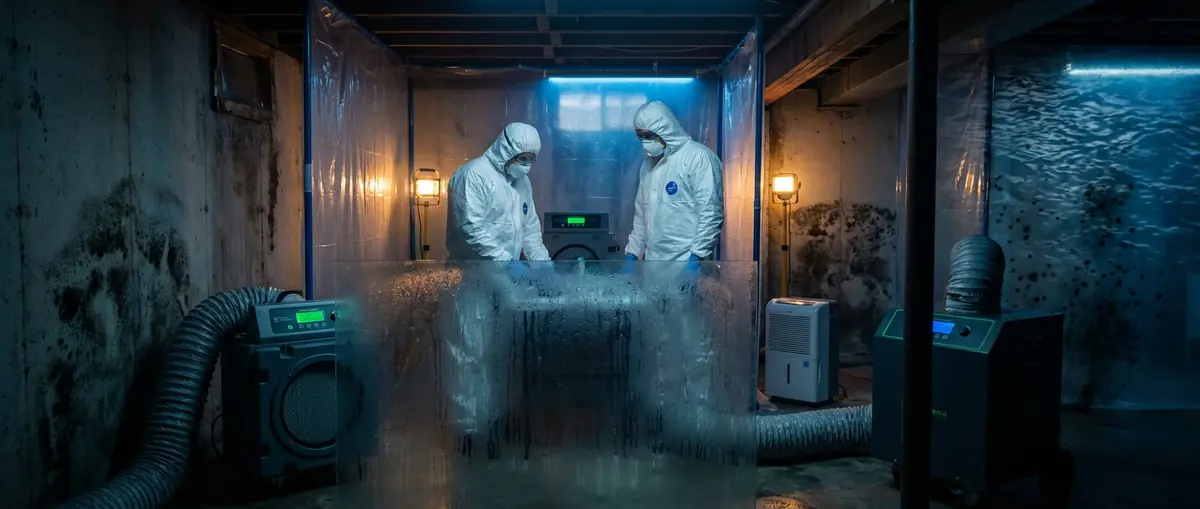
NRPG approaches mould remediation as a biohazard operation. Our primary objective is source containment—ensuring cross-contamination never occurs while we physically extract the compromised building materials from the property.
Negative Pressure Containment
We construct airtight microbial containment chambers utilising 6-mil poly-sheeting and zipper-doors, keeping active mould spores isolated from healthy, unaffected areas of the home.
Bio-Extraction & Sanding
Visible surface mould is deeply wire-brushed, sanded, or HEPA-vacuumed directly off structural timber. Any hopelessly compromised porous drywall is cut and safely discarded into sealed bio-bags.
Air Quality Scrubbing
Industrial HEPA scrubbers filter the air within the containment zone 4 to 6 times per hour, trapping dead micro-particulates up to 0.3 microns before they can be inhaled.
The IICRC S520:2025 Remediation Standard
- Initial Moisture Root-Cause: Mould only grows where water exists. We first utilise thermal imaging to locate and halt the source of moisture intrusion.
- Pre-Remediation IAQ Testing: (Optional) Engaging a third-party Indoor Environmental Professional (IEP) to baseline the aggressive spore count.
- Containment & Negative Air: Sealing vents and doorways, establishing negative pressure so air only flows towards our HEPA filtration exhaust.
- Physical Removal & Antimicrobial Wash: Discarding unsalvageable materials, followed by heavy application of botanical antimicrobial solutions.