Loading...
Mould Remediation Guide
Complete Mould Identification, Health Risks & Professional Remediation
Health Warning
Mould exposure can cause serious health effects, especially for those with respiratory conditions, allergies, or compromised immune systems. If experiencing severe symptoms, seek medical attention immediately. Never attempt to remove large areas of mould without proper protective equipment.
Common Mould Types in Australian Properties
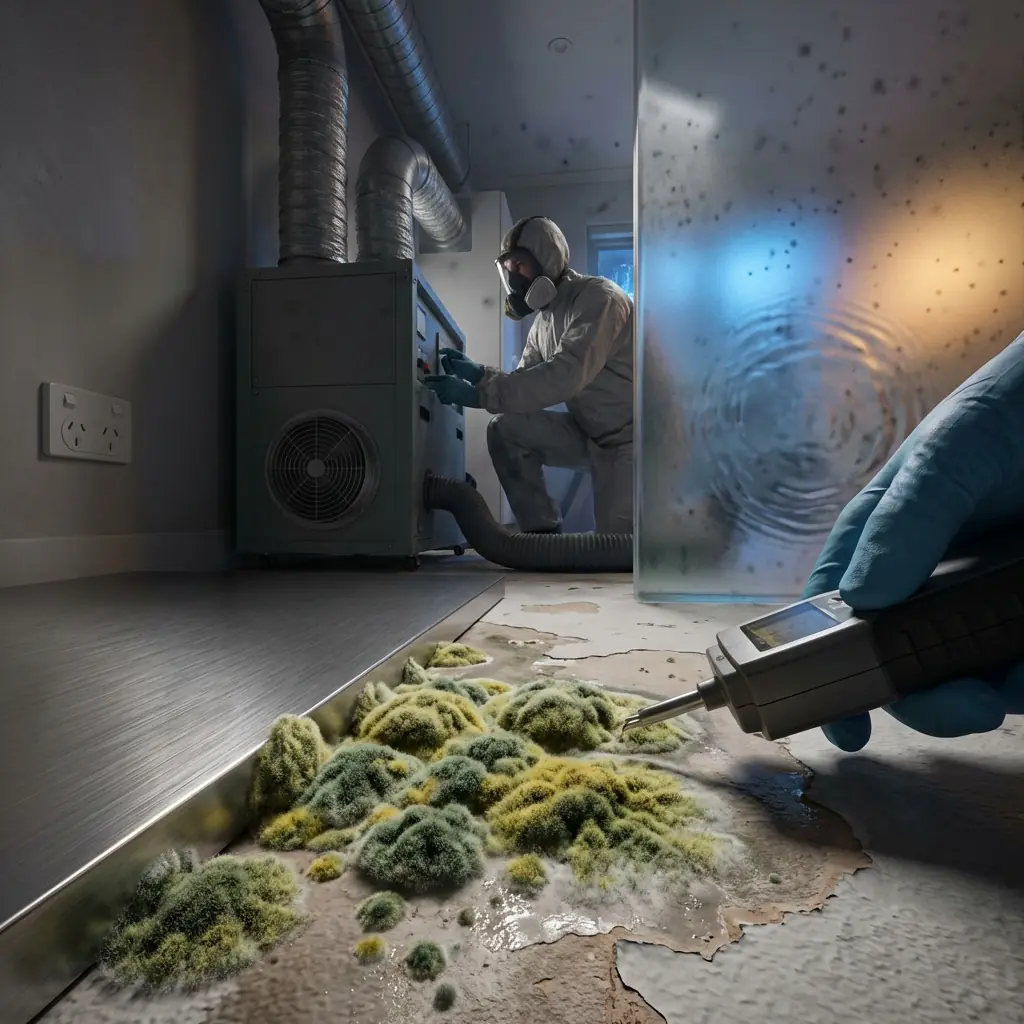
Aspergillus
Appearance:
Yellow-green to brown
Common Locations:
Walls, insulation, paper products
Growth Conditions:
Warm, humid environments
Identification Tips:
Powdery texture, musty odour
Risk Assessment
Health Risk:High - respiratory issues, allergies
Removal Difficulty:Moderate to High
Efflorescence — Not Mould, But Often Confused
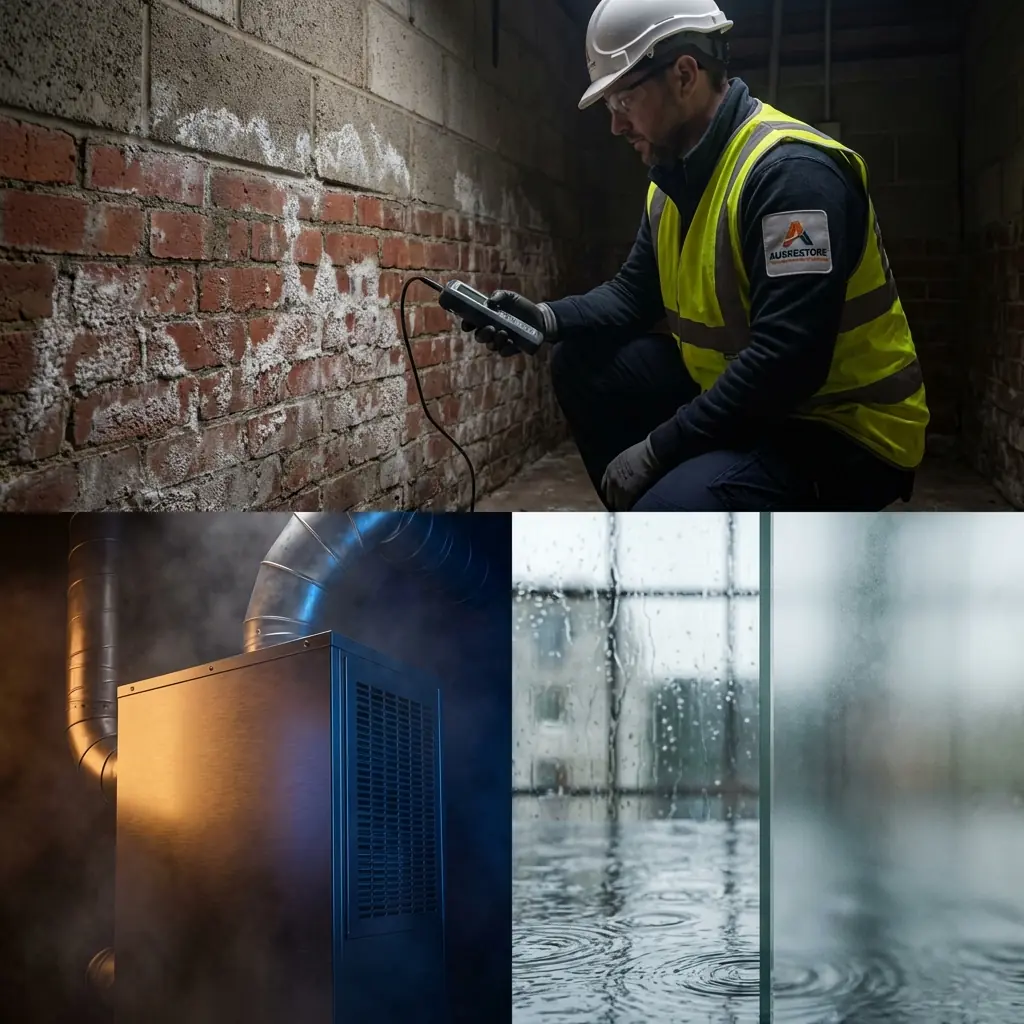
What Is Efflorescence?
Efflorescence is a deposit of mineral salts left behind when water moves through masonry, concrete, or brick and evaporates on the surface. It appears as a white or crystalline powdery coating and is often mistaken for white mould.
Visual Difference
- Efflorescence: White/crystalline powdery appearance, chalky texture, dissolves in water
- Mould: Fuzzy or slimy organic growth, does not dissolve in water, often has a musty odour
Why It Matters
While efflorescence itself is not harmful, it indicates a moisture intrusion pathway through the masonry or concrete. If left unaddressed, the ongoing moisture problem can eventually lead to actual mould growth behind or around the affected surfaces.
Removal Methods
- Dry brushing with a stiff-bristle brush for light deposits
- Diluted white vinegar solution for moderate buildup
- Diluted muriatic acid for stubborn deposits (with proper PPE)
- Follow up with waterproofing treatment to prevent recurrence
When Professional Help Is Needed
Persistent or recurring efflorescence indicates an ongoing water intrusion problem that requires investigation by a restoration professional. The underlying moisture source must be identified and resolved to prevent structural damage and potential mould growth.
Health Effects of Mould Exposure
Respiratory
Common- Persistent coughing
- Wheezing
- Shortness of breath
- Chest tightness
- Sinus congestion
At Risk: Asthma sufferers, elderly
Allergic Reactions
Very Common- Sneezing
- Runny or stuffy nose
- Itchy eyes, nose, throat
- Skin rashes
- Hives
At Risk: Those with allergies, children
Neurological
Less Common- Headaches
- Memory problems
- Difficulty concentrating
- Dizziness
- Fatigue
At Risk: Prolonged exposure cases
Severe Reactions
Rare but Serious- Fever
- Difficulty breathing
- Lung infections
- Bleeding in lungs
- Immune suppression
At Risk: Immunocompromised individuals
Medical Advice: If you experience persistent symptoms related to mould exposure, consult a healthcare professional immediately. Document your symptoms and exposure for medical assessment.
Mould Contamination Classifications
Level 1
Less than 1m²
Small isolated areas
Action: Can be DIY with proper precautions
PPE: N95 mask, gloves, goggles
Bathroom ceiling spots, window sills
Level 2
1-3m²
Mid-sized contamination
Action: Professional recommended
PPE: Full face respirator, protective suit
Wall sections, large ceiling areas
Level 3
3-10m²
Large contamination
Action: Professional required
PPE: Full PPE with containment
Multiple walls, extensive water damage
Level 4
Greater than 10m²
Extensive contamination
Action: Specialist remediation team
PPE: Full containment, negative air
Whole rooms, HVAC contamination
Professional Remediation Process
1
Assessment & Containment
Day 1Critical
Professional inspection
Moisture mapping
Air quality testing
Containment barriers setup
HEPA filtration installation
2
Source Elimination
Day 1-2Critical
Fix water source
Remove standing water
Dry affected areas
Dehumidification
Moisture control
3
Removal & Disposal
Day 2-4Critical
PPE equipment setup
Contaminated material removal
HEPA vacuuming
Proper waste disposal
Surface cleaning
4
Cleaning & Treatment
Day 3-5
Antimicrobial application
Surface sanitisation
Air scrubbing
Fogging treatment
Encapsulation if needed
5
Restoration & Prevention
Day 5-7+
Material replacement
Reconstruction
Moisture barriers
Ventilation improvements
Final clearance testing
Mould Prevention Strategies
Moisture Control
- Maintain 30-50% humidity
- Fix leaks within 24 hours
- Use exhaust fans
- Proper drainage
- Regular gutter cleaning
Ventilation
- Improve air circulation
- Use dehumidifiers
- Open windows regularly
- HVAC maintenance
- Bathroom/kitchen fans
Monitoring
- Regular inspections
- Moisture meters
- Check hidden areas
- Monitor problem spots
- Professional assessments
Maintenance
- Seal cracks and gaps
- Waterproof basements
- Maintain roof/gutters
- Grade landscaping
- Update old plumbing
Mould & Insurance Coverage
Important: Mould coverage varies significantly between insurers and policies. Many standard policies exclude mould or have strict limitations. Always review your specific policy and consider additional mould coverage if available.
Sudden vs Gradual
VariableSudden water damage usually covered, gradual mould growth often excluded
💡 Document the water event that caused mould
Mould Exclusions
Often ExcludedMany policies specifically exclude mould damage
💡 Check for mould endorsements or riders
Water Damage Related
Potentially CoveredIf mould results from covered water damage
💡 Link mould to covered peril
Prevention Failures
Not CoveredLack of maintenance or prevention voids coverage
💡 Maintain records of prevention efforts
Health Effects
Separate PolicyHealth issues require health insurance
💡 Document health impacts for liability
Remediation Limits
Capped AmountOften $5,000-$10,000 limits if covered
💡 Consider additional mould coverage
Property-Specific Mould Considerations
Residential Properties
- • Bathroom and kitchen ventilation
- • Basement moisture control
- • Attic insulation and ventilation
- • Window condensation management
- • Regular HVAC maintenance
Commercial Properties
- • HVAC system monitoring
- • Workplace health compliance
- • Regular professional inspections
- • Employee health documentation
- • Liability considerations
Industrial Properties
- • Large-scale ventilation systems
- • Process moisture management
- • Safety compliance requirements
- • Equipment protection protocols
- • Environmental monitoring
Mould Remediation FAQs
Frequently Asked Questions About Mould
Is black mould dangerous to health?
Yes. Black mould (Stachybotrys chartarum) produces mycotoxins that can cause respiratory issues, allergic reactions, headaches, fatigue, and in severe cases, neurological symptoms. However, all mould species can affect health — colour alone does not indicate toxicity. People with asthma, allergies, compromised immune systems, and young children are most vulnerable. Any visible mould growth larger than 1 square metre should be professionally assessed and remediated by IICRC-certified technicians using containment and HEPA filtration to prevent spore spread during removal.
How much does mould removal cost in Australia?
Professional mould remediation in Australia typically costs $1,500–$8,000+ depending on the extent and location. Small areas (under 1 sqm, surface mould on accessible walls) cost $500–$1,500. Moderate infestations (1–10 sqm, behind walls or in ceiling cavities) cost $2,000–$5,000. Large-scale remediation (structural mould, entire rooms, HVAC contamination) can exceed $8,000–$15,000. The Disaster Recovery platform fee is $550 with $2,200 held for your contractor. Costs increase when mould is in concealed areas requiring demolition for access. Payment plans are available through Equipped Commercial Finance.
Does insurance cover mould removal in Australia?
Mould removal is covered by most Australian insurance policies only when the mould results from a covered event — such as a burst pipe, storm damage, or firefighting water. Mould from gradual moisture buildup, poor ventilation, condensation, or maintenance neglect is almost always excluded. To maximise your claim: document the original water event, report promptly (mould from a covered event reported months later may be disputed), and get a professional mould assessment linking the growth to the insured event. We provide full documentation to support your insurance claim.
Can I remove mould myself or do I need professionals?
Small areas of surface mould under 1 square metre on non-porous surfaces (tiles, glass, metal) can be cleaned with a solution of 80% white vinegar and 20% water. However, professional remediation is essential when: mould exceeds 1 sqm, mould is on porous materials (gyprock, timber, carpet), mould is in concealed spaces (wall cavities, ceiling voids), occupants have health symptoms, or the moisture source has not been identified. DIY cleaning of large mould areas without proper containment can spread millions of spores through your HVAC system, making the problem significantly worse.
Why does mould keep coming back after cleaning?
Mould returns for three main reasons: (1) The moisture source was not identified and fixed — mould is a symptom of excess moisture, not the root cause. Common hidden sources include subfloor moisture, condensation in wall cavities, leaking pipes behind walls, and inadequate ventilation in bathrooms and laundries. (2) Surface cleaning only removed visible mould but left the root system (hyphae) embedded in porous materials like gyprock and timber. (3) Spores were spread during DIY cleaning and colonised new areas. Professional remediation addresses all three by identifying and fixing the moisture source, removing contaminated materials, and using HEPA containment to prevent cross-contamination.
How quickly does mould grow after water damage?
Mould can begin growing within 24–48 hours of water damage in the right conditions (moisture above 60% RH, temperature 20–30°C, organic material to feed on). Visible mould colonies typically appear within 3–7 days. By 14 days, mould can penetrate deep into gyprock, timber, and carpet underlay, making remediation significantly more complex and expensive. This is why the IICRC standard requires water damage drying to begin within 24 hours — preventing mould growth is far cheaper than remediating an established infestation.
Source: Disaster Recovery — disasterrecovery.com.au
Category: Mould Remediation
Last reviewed:
Standard: IICRC S520:2025 certified practices
Concerned About Mould in Your Property?
Get professional mould inspection and remediation services